The slab of concrete or mortar on top of a brick chimney rarely gets a second thought until a chunk of it lands in the gutter. By then it has usually been cracking for years. For owners in Placentia the choice comes down to sealing the cracks or casting a new slab, and the right one depends on what is left of the old one. Jessup Chimney Solutions looks at the crown on the roof before naming a figure for either, and this post explains how we decide.
What the crown does for a fire-season chimney
The crown sheds water away from the brick and holds the flue tile steady at the top. On a chimney with a cap it does a third job: it is what the cap fastens to. A cap screwed into a crown that is breaking up can loosen in a strong wind, and a Santa Ana gust that lifts one side of a cap leaves a gap the width of a hand where the spark screen used to be. So when we check a cap before autumn, we check what it is fastened to.
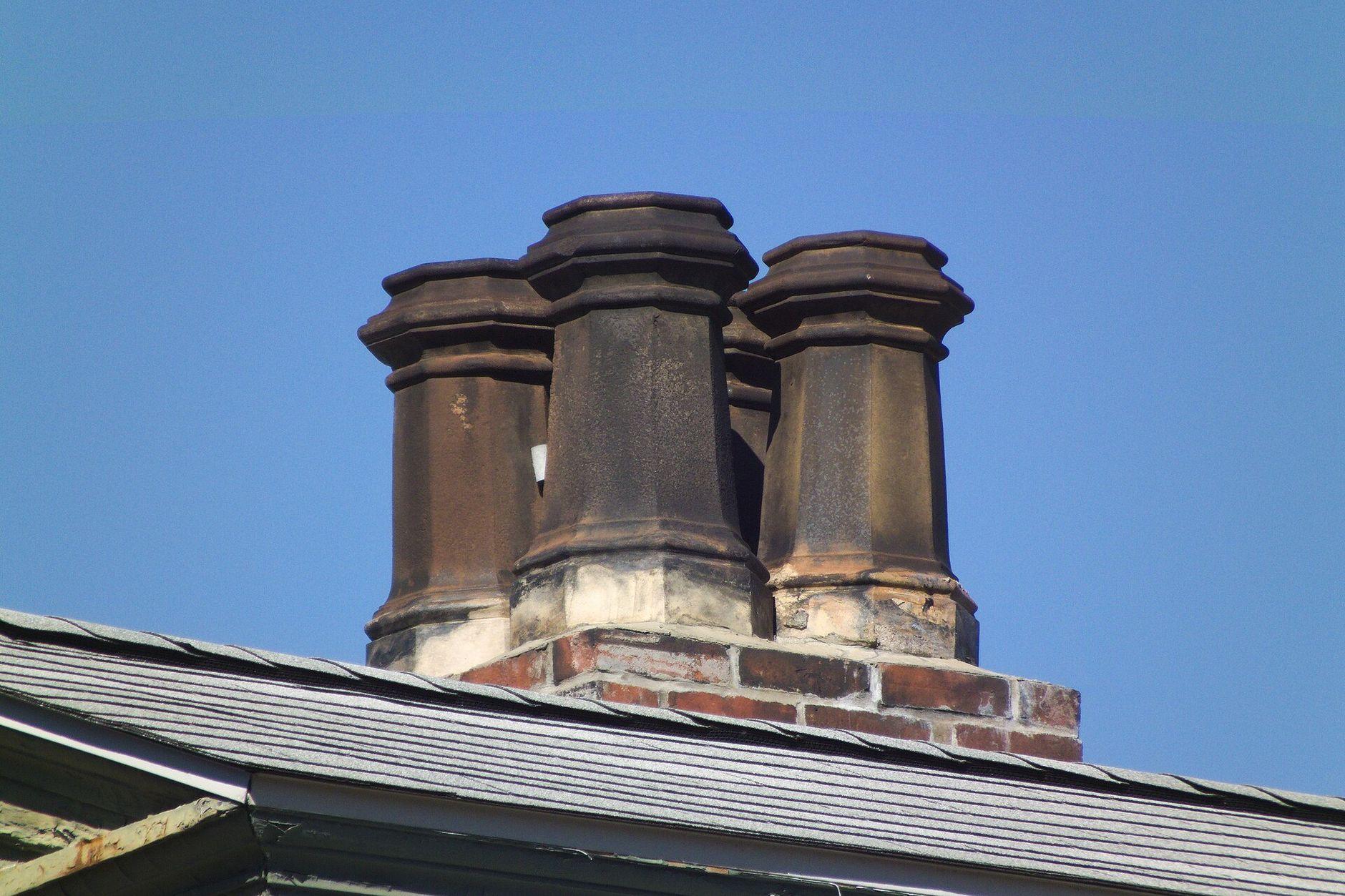
Crowns crack for ordinary reasons. Summer heat and winter rain make the slab and the flue tile move by different amounts, and a crown cast tight against the tile has nowhere to give, so it splits. Some tops were never true crowns at all, just a sloped layer of leftover mortar spread by the bricklayer, and that layer breaks up within a few decades.
Option one: seal the cracks
Sealing suits a crown that is still one solid piece, still bonded to the brick, with fine cracks that have not yet let water underneath. We clean the surface, work a flexible crown sealer into the cracks and coat the top so they stay closed as the slab moves.
It is the lower-cost route, and the right one when the slab is sound. It buys years rather than decades, and it needs a look every few years to keep working.
Option two: cast a new crown
A new crown is the route when the old one is broken through, loose, hollow when tapped or crumbling at the edges, or when water is already staining the brick beneath it. We break out the old slab, build forms and cast a new crown that overhangs the brick, so rain leaves the edge instead of tracking down the face. A flexible joint goes between the crown and the flue tile so the two can move independently.
It costs more, because of the demolition and the forming, but it resets the top of the chimney. It is also the natural moment to fit a new cap, since the fastening points are fresh.
How we choose between them
On the roof we work through a short list:
- whether the crown is one piece or several, and whether any piece moves when pressed
- the width and length of the cracks, and whether they run through to the flue tile
- staining, white salt deposits or loose mortar on the brick just below
- whether the flue tile itself has cracked at the top
- how the existing cap is fastened, and whether those fastenings are holding
- whether what sits there is a real cast crown or a mortar wash
If every answer points to a sound slab, sealing is the honest choice and we say so. If two or three point the other way, sealing would only delay the bill. You see photos of what we found, and the quote lists the option we recommend, plus the other one if it is still workable, with what each includes.
Crown work has no fixed figure on our price list; the size of the top and the state of the brick vary too much from house to house. You get a written number from the roof visit, before any work is booked. If you have spotted bits of mortar on the roof or in the gutter, or a crack visible from the street, ask us for a crown and cap quote and mention what you noticed.
Pairing the crown with the cap
Since the cap fastens to the crown, we often price the two together. A cap fitted on a Placentia chimney is quoted after we measure. The size of the top and the metal set the price, and our post on what sets a cap's price explains both. If a new crown is going on, the cap can be sized to it on the same visit rather than adapted to a slab that changes later.
When the crown is not the whole problem
Sometimes the crown is the visible failure and something else waits underneath. Brick that has lost its mortar below the crown needs masonry repair. Water inside the house may be coming through the flashing rather than the top; our post on what a chimney leak costs covers how we trace it. And a flue tile cracked at the top may be cracked further down, which a camera Level 2 inspection at $405 can confirm.
With the crown sound, a breathable waterproofing treatment for the brick can follow. We suggest it only when the mortar, the crown and the roof flashing are already in good order.
Why we like crown work in the dry months
Two reasons. Freshly cast concrete cures well without heavy rain on it, and a sound crown means a cap that stays put when the Santa Ana winds arrive. If you get only one roof visit a year, make it the one before the dry wind.
We repair crowns across Placentia, Fullerton, La Habra and Diamond Bar. The crown repair page has more on what the work involves.
For a written figure on your own crown, start on the contact page and we will set a time to get on the roof.
Ready Before the Santa Anas?
Jessup Chimney Solutions sweeps flues, fits spark-screened caps and repairs the gaps that let heat or embers out, for homes in Placentia, Fullerton, La Habra, Diamond Bar and nearby cities.